Survey: Help Shape the Replicability of Plastics2Olefins Technology
The Plastics2Olefins project has launched a new Replicability Survey to better understand how high-temperature pyrolysis technology can be scaled and implemented across different countries, regions, and conditions.
Today, a large share of plastic waste in Europe remains unsorted and difficult to recycle, often ending up in landfills or incineration. Plastics2Olefins addresses this challenge by developing a high-temperature (>700°C) pyrolysis process to convert unsorted plastic waste into valuable olefins, using 100% renewable electricity at the demonstration plant in Puertollano, Spain.
Why Your Input Matters
The purpose of this survey is to gather insights from project partners and relevant stakeholders on the replicability potential of the Plastics2Olefins technology. Your feedback will help assess how factors such as regional conditions, infrastructure, and regulatory frameworks may influence future deployment of this solution.
The survey:
Contains 30 questions
Takes approximately 5–10 minutes to complete
Uses a simple scale from low to high
Is open to partners and external stakeholders
Take the Survey
We strongly encourage all Plastics2Olefins partners to participate and to share the survey within your networks. Broad input is essential to ensure robust, realistic insights.
Your contribution will support the next steps in advancing circular and climate-friendly solutions for plastic waste.
Presenting the Partners: DTU – Using Life Cycle Assessment to Guide Circular Innovation
The Technical University of Denmark (DTU) is ranked among Europe’s top technical universities and plays a central role in educating the next generation of engineers and researchers. DTU’s main campus is located north of Copenhagen near the town of Lyngby. Photo: PHOTO Ehrhorn & Hummerston
As one of Europe’s leading technical universities, the Technical University of Denmark (DTU) brings world-class expertise in sustainability assessment to the Plastics2Olefins project.
By applying advanced life cycle assessment (LCA) methods in Plastics2Olefins, project partner DTU helps ensure that the new process for chemical recycling of plastics delivers real, measurable environmental benefits.
A Technical University with Global Reach
The Technical University of Denmark (DTU) was founded in 1829 by H.C. Ørsted as Denmark’s first polytechnic institution. Today, it is ranked among Europe’s top technical universities and plays a central role in educating the next generation of engineers and researchers.
DTU currently educates approximately 13,500 students and 1,600 postgraduates, and employs around 6,000 professionals. Its research and education activities span a wide range of engineering and technology disciplines, with strong links to industry, public authorities, and international partners.
Within DTU, the Section for Quantitative Sustainability Assessment focuses on applying quantitative methods to evaluate environmental sustainability across whole life cycles. This work includes life cycle assessment (LCA) and UN Sustainable Development Goals (SDG) assessments, with a strong emphasis on absolute sustainability perspectives through the DTU Absolute Sustainability Centre.
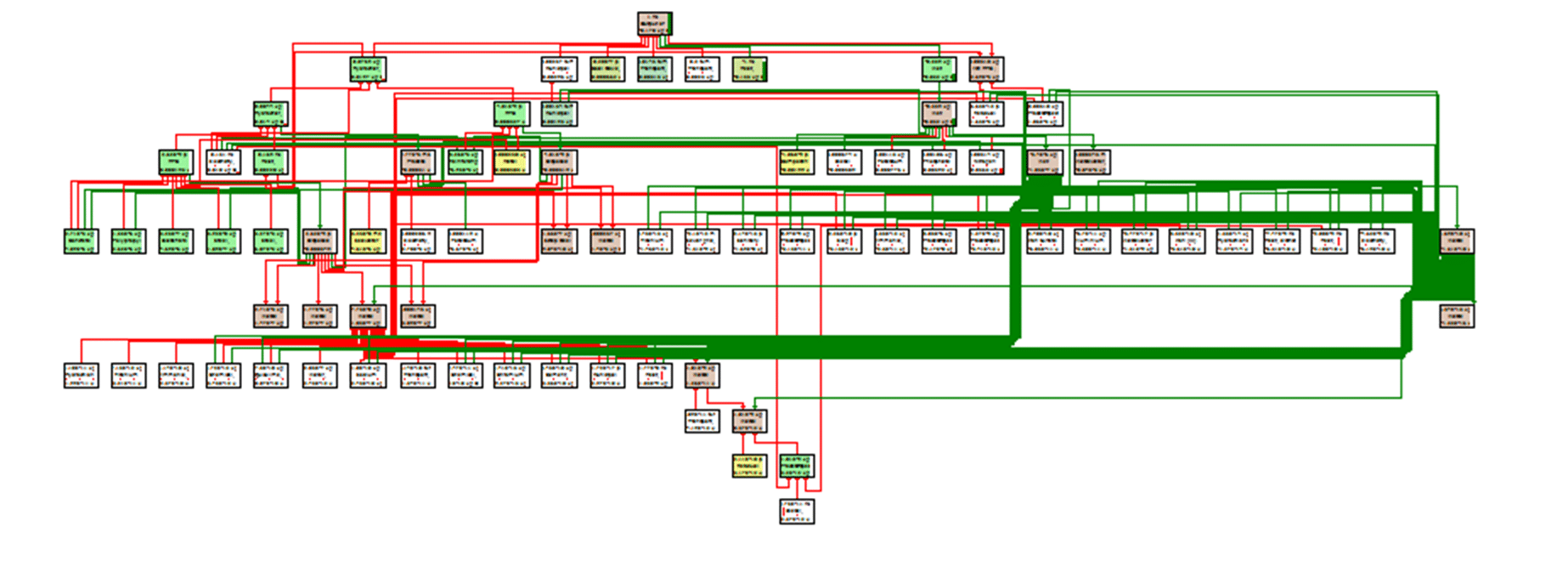
An example of a process tree in LCA, showcasing the complexity of the models.
The section is recognised as a global leader in LCA-based method development, providing tools such as the well-known USEtox model. It offers strong research capabilities, cross-sector methods, and a stable PhD programme, while actively fostering collaboration across disciplines and sectors. Excellence lies in initiating new research fields, shifting paradigms from relative to absolute assessments, coordinating global scientific efforts, and translating LCA into practical applications.
DTU’s Role in Plastics2Olefins
The Plastics2Olefins project has an ambitious environmental objective: to significantly cut greenhouse gas emissions compared to current end-of-life options for plastics. In this context, rigorous sustainability assessment is essential.
As part of Work Package 7 (WP7), DTU is responsible for conducting life cycle assessments of the Plastics2Olefins process at both demo and full scales, using data collected from partners across the consortium. This allows the team to evaluate the environmental performance of the new technology in a transparent and science-based way.
Dr. Mikolaj Owsianiak is Senior Researcher at the Section of Quantitative Sustainability Assessment (QSA) of DTU.
“Given that the project’s objective is to reduce greenhouse gas emissions by over 70% compared to the current end-of-life options for plastics, the knowledge of LCA is vital in Plastics2Olefins,” says Dr. Mikolaj Owsianiak, Senior Researcher at DTU.
A key part of the work is to compare the new Plastics2Olefins process with existing alternatives:
“The novel process will be compared against the currently predominant low temperature plastic pyrolysis to transparently evaluate potential benefits and tradeoffs,” explains Dr. Owsianiak.
DTU is also involved in the replicability study within WP7, which explores how the process might perform in different regional contexts. This is crucial because environmental impacts are influenced by local conditions such as energy mix, waste management systems, and industrial infrastructure.
“The optimal solution for plastic waste may not be the same between different locations,” notes Dr. Owsianiak.
Promising LCA Insights and Next Steps
The ongoing LCA work is already yielding valuable insights for the Plastics2Olefins consortium.
“The preliminary results of the LCA on the Plastics2Olefins demo scale process are promising within Spanish context,” says Dr. Owsianiak.
As the demo plant design and operation are further refined, remaining assumptions in the assessment will be updated when new data becomes available.
According to DTU’s Senior Researcher, the LCA indicates that the Plastics2Olefins process can offer advantages over benchmark pyrolysis in several key environmental impact categories:
“The LCA shows lower impacts than benchmark pyrolysis in several impact categories, including climate change and fossil resource use, but tradeoffs are predicted in terms of toxicity and mineral resource use due to the implementation of 95% renewable electricity.”
Even with these tradeoffs, the findings are encouraging for the project’s future:
“Nevertheless, the benefits are not only due to green energy use, which is encouraging for the further development of the process,” concludes Dr. Owsianiak.
By combining cutting-edge LCA methodologies with a strong focus on absolute sustainability, DTU helps ensure that Plastics2Olefins not only advances technological innovation, but also delivers genuine environmental benefits in the transition towards a more circular plastics economy.
From Pilot Progress to Future Impact: Highlights from GA#8 in Madrid
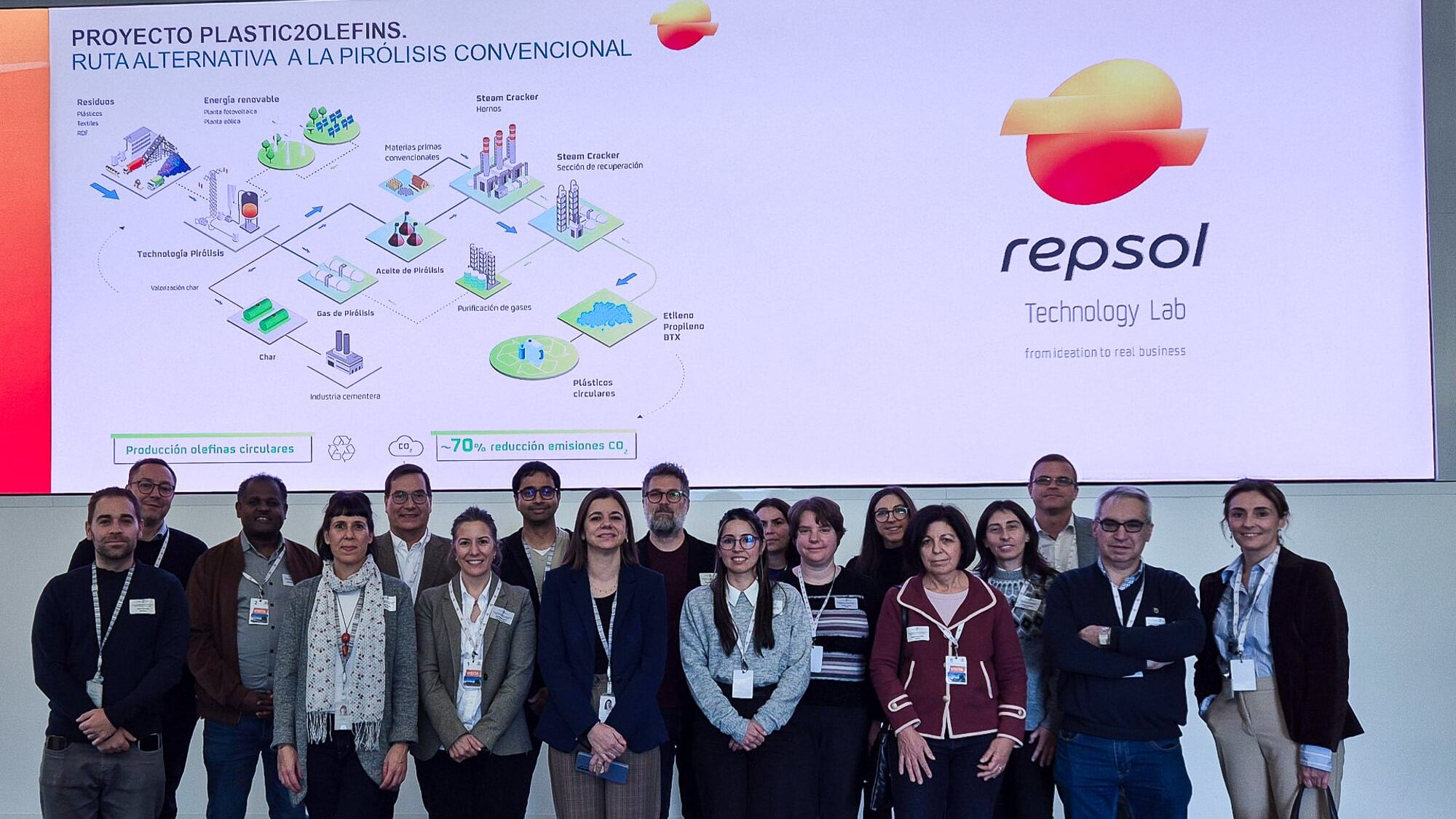
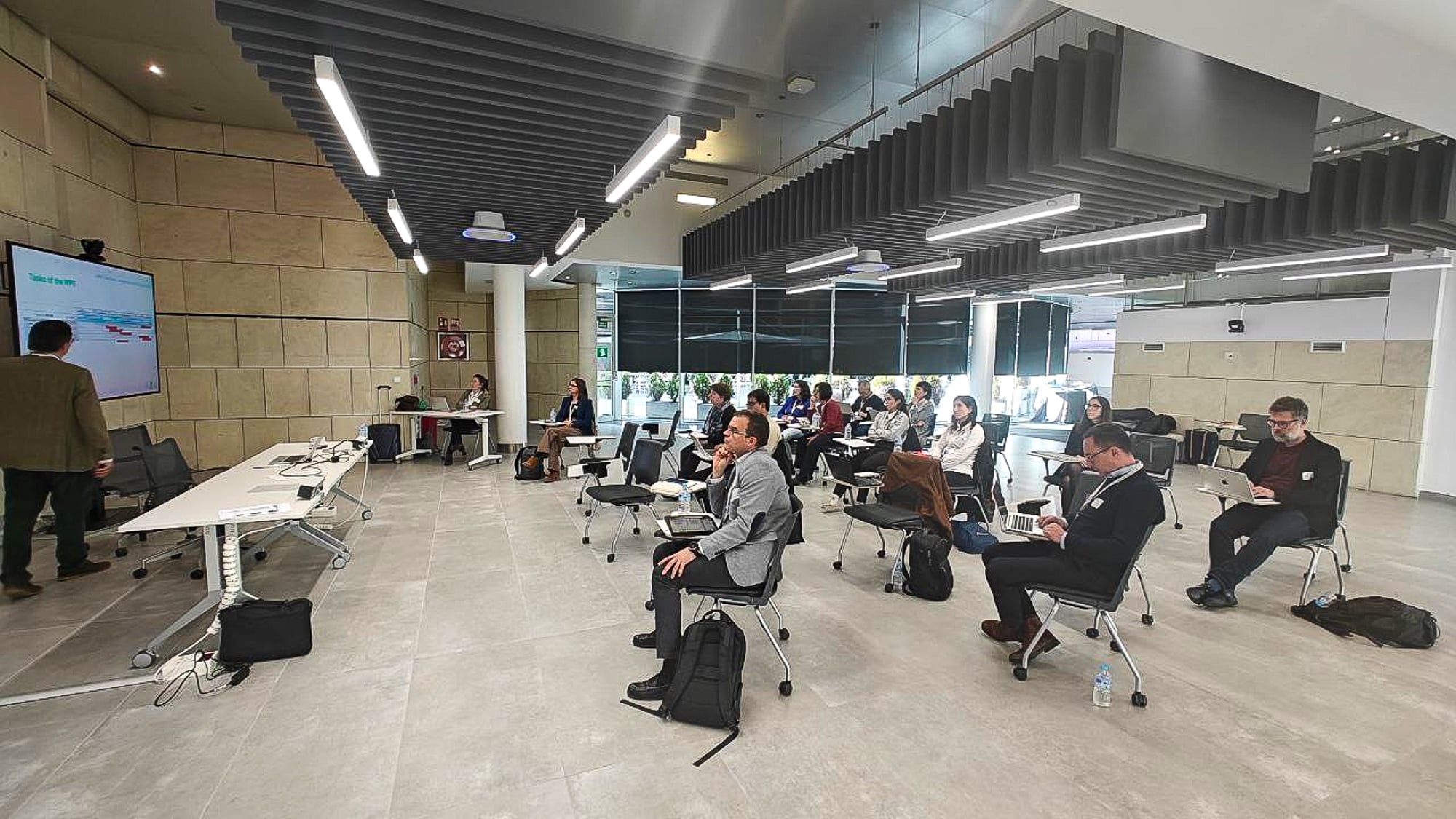
The partners gathered at Repsol’s cutting-edge Technology Lab in Móstoles.
At the 8th General Assembly in Madrid, Plastics2Olefins partners gathered to push the boundaries of circular innovation and accelerate progress toward industrial-scale chemical recycling.
The Plastics2Olefins consortium met on 20 November 2025 for its 8th General Assembly (GA), hosted by Repsol at the state-of-the-art Repsol Technology Lab in Móstoles, Madrid.
The meeting brought together project partners from across Europe and Thailand to review progress, align on technical developments, and plan the next steps toward transforming plastic waste into high-value olefins.
With a full programme including work package presentations, in-depth discussions, and a guided pilot plant visit, the GA#8 marked another important milestone in the project’s journey.
Morning Highlights: Reviewing Progress Across Work Packages
The meeting opened with a welcome from the project coordinator Rebeca Yuste (Repsol) before partners presented updates from the last six months, results achieved, and upcoming activities.
The morning session featured contributions from all technical and management work packages (WP):
WP1 – Project Coordination (PNO Innovation)
WP2 – Pre-treatment and Pyrolysis Optimisation (Repsol)
WP3 – Downstream Process Optimisation (CIEMAT)
WP4 – Digitalisation and Renewable Energy Integration (Repsol)
WP5 – Technical Integration and Engineering (Técnicas Reunidas)
WP8 – Exploitation, Communication & Dissemination (SIN)
Partners discussed key achievements, remaining technical challenges, pilot progress, downstream optimisation tasks, sustainability modelling, and engineering design for the future demonstration plant.
Visiting the Repsol Technology Lab and Pilot Plant
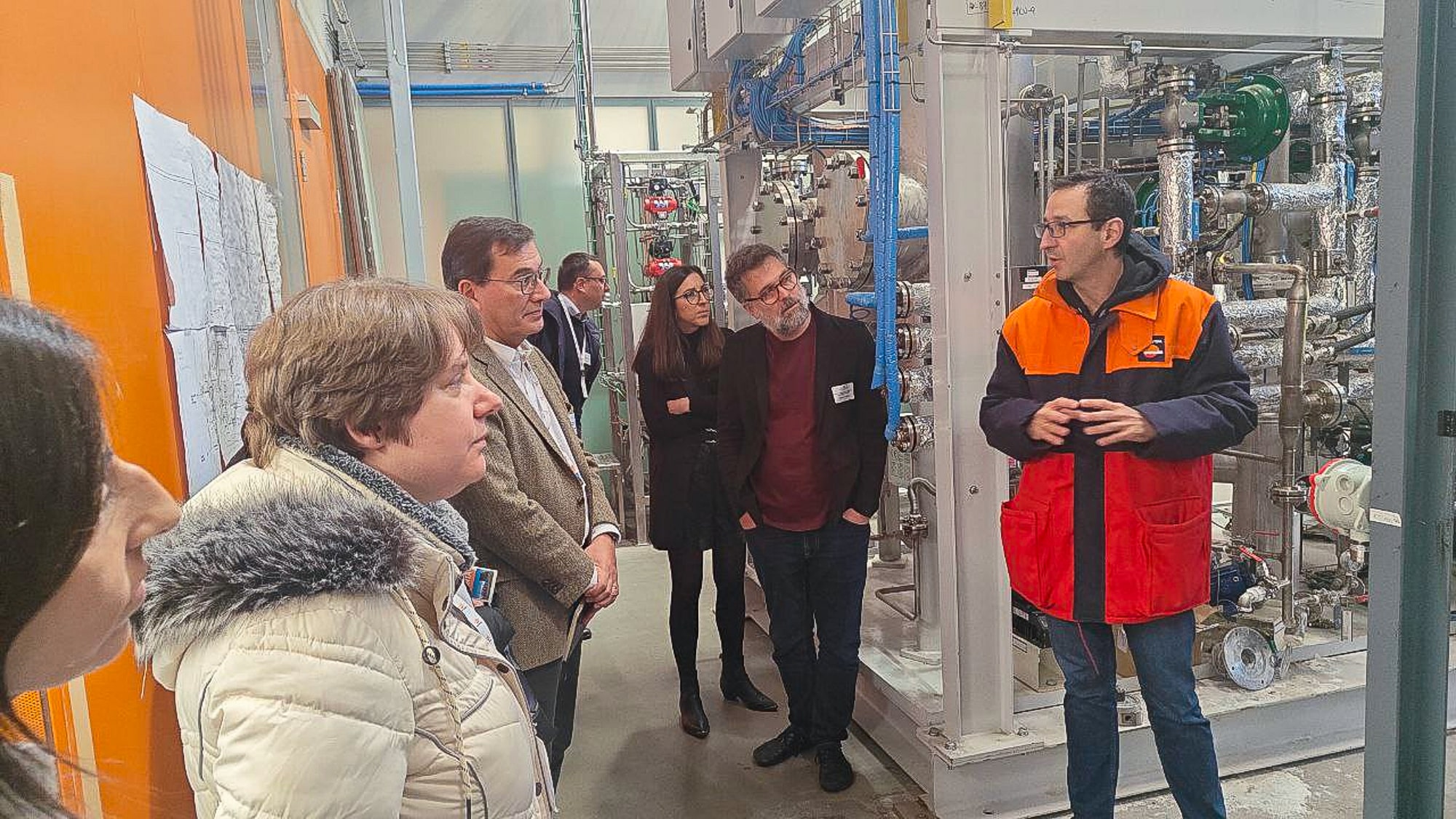
A highlight of the day was the guided tour of the Repsol Technology Lab and the Plastics2Olefins pilot plant, offering partners a firsthand look at the technological advances driving the project.
A highlight of the day was the guided tour, offering firsthand insight into the technological developments.
Seeing the ongoing work on pyrolysis, gas cleaning, condensation systems, and process integration provided valuable insights into the next steps required for scaling the technology toward demonstration level.
Afternoon Deep Dive: Lessons Learned and Strategic Alignment
In the afternoon, partners engaged in an intensive review session covering Periodic Report learnings, Description of Action compliance, resource use by WP, and financial status across beneficiaries.
The open discussion format allowed partners to align on:
Cross-WP technical dependencies
Data needs for upcoming reports
Key bottlenecks and research requirements
Preparations for upcoming evaluations and project milestones
Reflecting on the work ahead, partners acknowledged both the complexity and the ambition of the project. As one participant noted:
“This is one of the complex projects with high ambition that needs detailed engineering work, good knowledge of techno-economics analysis, and deeper regulations.”
With strong collaboration and steady progress, the Plastics2Olefins project is moving closer to delivering scalable, circular solutions for plastic waste.
The session concluded with agreement on action points, next steps, and expectations to continue the project implementation.
Looking Ahead: Commitment to Collaboration and Impact
The 8th General Assembly underscored the strong collaboration and shared ambition across the Plastics2Olefins consortium. While significant progress has been made in pilot plant development, sustainability modelling, engineering design, and digital integration, partners also highlighted the need for intensified research and continued alignment.
The consortium remains committed to delivering a robust, scalable chemical recycling process capable of converting complex plastic waste into valuable olefins. This will contribute to Europe’s transition toward a more circular, resource-efficient, and climate-neutral future.